I just Love a Good Story. Don’t you just Love a Good Story? Here’s another Good Story.
Dear Artist of the Universe, Beloved Sculptor, Singer, and Author of my life, born of your image I Have made a home in the open fields of your heart. The magnetic tug of your invitation to grow is slowly transforming me into a gift for the world. Mentor me into healthy ways of living.
By Macrina Wiederkehr
Last month I asked how you keep yourself safe. Did you send in your comments? Here are ways some people keep themselves safe:
My husband makes me feel safe and validated.
A good friend gives excellent advice whenever a problem arises.
Some pray when they are afraid or don’t feel safe.
Some have a group of friends that make them feel safe.
Some turn to their fathers and/or mothers for advice that keeps them safe.
Some have family gatherings that help them feel safe and wanted.
Some have family members in other states or who have passed away, and they don’t feel very safe.
The word for the month: cantankerous.
Cantankerous is an adjective and means bad-tempered, argumentative, and uncooperative. It is often used to describe or applied to people, especially regarding their behavior.
So now for a Good Story or a Really Good Story
Early College Students. Have you heard about Early College Students? Have you wondered who or what kind of student is an Early College Student? Until I was given a class, I had no idea that such a thing existed. An Early College Student is an eleventh (11th) grade student who is enrolled in his or her high school and simultaneously enrolled in the first year of college. The student must have good grades and a GPA and must apply for the program. They usually begin their college career in a two-year college in order to get them acclimated to the college environment. They quickly come to realize that college life in a two-year college is very different from high school. They stay through the twelfth (12th) grade and the second year of college, where they, after completion of the two years, earn an AA degree and their high school diploma. During their second year at the college, they apply to a four-year university where they complete the final two years and earn their bachelor’s degree.
I was totally against this program when I first heard about it. High school is a time for growing, learning about oneself, and bettering oneself. High school teaches so much, even though much of the teaching seems negative during the high school years. For example, a female student whose boyfriend – the boy she thought was her boyfriend – who is disloyal and sees other girls, teaches the female how to respect herself and not worry so much about someone whose values differ from her values. We eventually learn these things, and use them later in life, probably when we encounter the experience again. An injury in high school, such as a star football player, who can no longer be the star, teaches the boy what is important in his life. Almost every experience we have in high school teaches us to grow, understand ourselves and causes us to be better people. We don’t see this while we are in high school and going through these experiences. It is a stage in life that I always felt everyone had to pass through, or for some, endure. The value of this learning comes when we need it and when we are older. What about the prom and the “grand to do” about who will be the prom queen and who will she ask to be the king? We learn tolerance from this and the fact that the king and queen are only the king and queen at the prom, which occurs at the end of the school year. But we also learn what we want for ourselves, what’s important to us, and being popular is a high school only concept. Almost everything we didn’t say or didn’t do, said or did, is a learning experience in high school. These Early College Students, because they are in a college, will miss out on this growth period when they join this program.
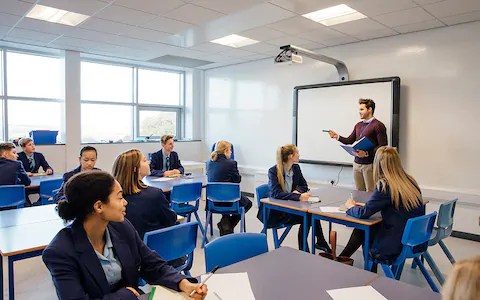
What happens later in life for these students? The students I had in my classes were focused on their classes. They were all very brilliant students. It would seem that they were mature enough to manage those missing high school experiences. They also seemed like studious students who ordinarily would stay to themselves in high school, missing out on those experiences enabling growth and helping them find out who they are, the values and beliefs they hold, what they want for themselves and who they select for friends. Those students in my classes had already figured out what they wanted for themselves, knew who they were and had a path for themselves. These students were creative, ambitious, and outstanding in every way.
When I had my first class, I began to understand the need for this type of class. These students take all of their classes at the college and the group stays together from English to biology, to math, and the other classes, like they would in high school. They would often leave to take tests at their high school, but generally, they were together. This was a good idea since putting them in classes where they didn’t know anyone would cause these students to be more apprehensive and feel they were being matched with adults. Keeping them together was important because high school students group themselves with their friends, especially if they live near each other. They form a large group of friends, and then they pair off into smaller groups. In college, students do not group of pair off. It is also not likely that they live near each other.
The students in my classes liked each other, so I did things in class that kept them working together and in groups to rely on each other, both in and out of class. These high school students were amazing. The work they turned in was incredible. These students applied deep thought to their assignments and projects. They were creative and information thirsty. They were phenomenal. Toward the end of the semester, the students matured more. I was worried about their growth, but they grew and natured more.
If your child qualifies for this program and you and your child feel he/she can manage it, sign your son or daughter into this program. I recommend it. There may be other things in your child’s school, so find out what those programs are and see whether they are right, or better, for your child. But please, please, please. Don’t force your son or daughter to enroll by signing them up for something they don’t feel they can manage. Children don’t want to disappoint their parents. The idea of failing something the parents wanted can stay with the student for the rest of their lives, for some. It will keep them afraid to “step out of the box” and they will not depend on themselves or think well of themselves.
Please let me know your thoughts on any of these programs. I want to hear what you think and what you have done so far.
Send a sample of how you used the word cantankerous, either in your writing or in your daily conversation. Send it to: www.judykelly@judycar.com and follow me.
Isn’t this a Good Story? Below are two other Good Stories. Give them a read. Take good care. Until next time.

 Love a Good Story