Love A Good Story

            This month on June 16, we celebrate Father’s Day. I’m happy we celebrate our fathers. They deserve it. We need our fathers. They do so much more in the family than we know and/or give them credit for.
Both parents contributed evenly to who I am today, and I am thankful and proud of that. Even though society thinks mothers are extremely important to a child’s development and upbringing, the father is just as important, especially in today’s time where the mother is away from the home as much as the father. But fathers contribute hugely to their children’s development and enable growth in ways we don’t think of or see. Men show, mothers say or tell.

When I was very young, I didn’t think about what my father was teaching me. I just loved him so much. Every day, I would sit in the window waiting for him to come home from work. When I saw him coming through the front gate, I ran to the door, jumping and squealing because my father was home. I did this until I was in the third grade. But as a third grader, I didn’t jump and squeal. I was glad to see him. Later, we moved to a new house, and the arrangement changed, but I greeted my father until I reached high school.

My father showed me and my siblings how to solve problems by the way he handled his problems and the help he gave to us. Whenever I had a problem and asked my father for help, he had a story to tell me. After the story, he would tell me the moral of the story and find out if I understood how to solve the problem. I told him what my next step would be. He also had a procedure for solving problems and when I was in high school, when he thought I would need it, he told me the procedure he used for solving problems. As an adult, I continue to use that method.

Fathers enable their children to have confidence, to be sure of ourselves. My father always encouraged me, told me I could do something I didn’t think I could do. My father showed me how to ride a bike after he bought me one for my birthday. He didn’t ask me if I wanted one; he bought the bike. He showed me how to handle the bike. Riding looks simple and easy, but there is so much to learn about riding a bike. It is not as easy as it looks. I loved to bike. As an adult, I was always on my bike. I was always confident in my ability to handle the bike, except I never wanted to change a flat tire, and because of that ability, I could get out of tight situations where many others either fell or had to get off their bike. Biking enabled me to see my ability and gave me the freedom to feel secure. I thank my dad for that.

My father also encouraged me to be knowledgeable, do well in school, be curious about things and find solutions. At report card time, I would bring my report card home to my mother, but I couldn’t take it back until my father had seen it. One time he didn’t like the grade I got in one class and went to the school to talk to the teacher. The grade was changed.

When I took on a project at home or at school, that was more than I expected and felt like giving up, my father would say, “Stay the course,” meaning bring what you began to a positive conclusion. Often it took me longer to complete, but I did what he asked of me. I completed the projects. I did it for him, at first. But my father showed me that completing the project made me a better person. I was now reliable.

My father showed me how to be an honest person by being honest and doing for others. He always said pay what you owe. But you don’t have to take on someone else’s debt. He encouraged me to always put myself in a positive position. Be truthful. The truth will not hurt me, but will make me a better person. He showed me, and all of us, love. He helped my mother with the dishes after meals, cooked for us, and helped clean the house. When I was sick, my father bought me ice cream and during dinner when I couldn’t eat with the family, he would come to my room and feed me chocolate ice cream, my favorite. He did that every time I had the flu, or cold. It was his medicine. Before I knew it, I felt so much better. Today, whenever I have the flu or cold, I get chocolate ice cream and think about my father. It was never medicine; it was his love for me.

My father asked me not to hate others for any reason. He encouraged me to help those around me who needed help. Be good to everyone. He was also a Christian man, thus, held Christian values. He also showed me how not to take advantage of women (which some women do to each other), and instead, lift them up. He showed me how, by the way he honored my mother.

He always said that until the country changes, it was still the man’s job to take care of his family. My father always provided for us. He protected us, gave us not only what we needed, but much of what we wanted. He had us evaluate what we wanted and showed us how not to waste money, time, or effort.

The world is changing now, and thankfully fathers see their children need them. From my view, fathers are much more involved in the lives of their children. In many public places, I’ve seen fathers do a myriad of things such as carrying their children or pushing them in the stroller, attending school meetings and parent-teacher meetings, attending school activities such as plays, chorus, football, basketball, science fair, and other school activities. These things show the children that they are important. This builds the son or daughter’s self-esteem, enables the son or daughter to know their place in the family and helps them feel safe.

I realize that there are many children or adults without fathers. With some, the fathers were not as involved with their children. Others had fathers who are in the service or do a service such as a firefighter, police officer or work away from the home. It would be a nice idea to leave your father, who works odd hours and is away from the home, a Father’s Day card expressing your thanks and love for him. See what happens. Be sure to let me know how things turned out. I will wait to hear from you. Only do this if you don’t have a personal reason to keep your distance.

On June 16, 2024, honor your father. Like you did with your mother on Mother’s Day, show your father that you are thankful for him and that you love him and care about him.

I would love to hear from you about your father. Please write and tell me all about your experience.

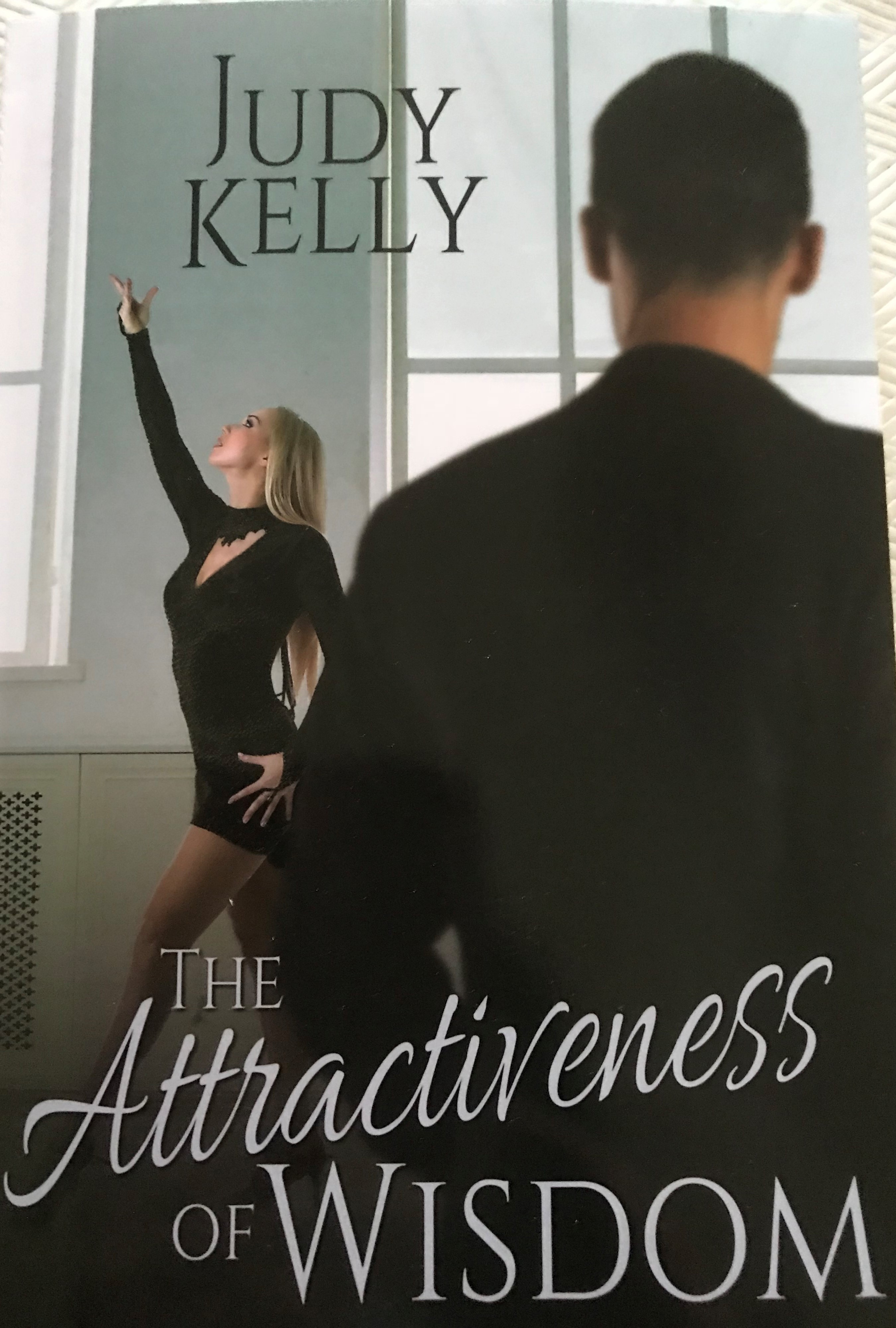
The Attractiveness of Wisdom is a story about a father and his relationship with his three children. Purchase the novel. Let me know how you enjoyed it and what you think of the father, Hamilton, in the story. I have to say I love him, and I really love his son, Jeremy, who is attached to his father and who also helps his father become a better person.

Isn’t that a Good Story? I hope you enjoyed it as much as I enjoyed writing it.

Please send me your comments by responding to this blog. Until next time, Love a Good Story. Purchase The Attractiveness of Wisdom. I know you will love it as well.
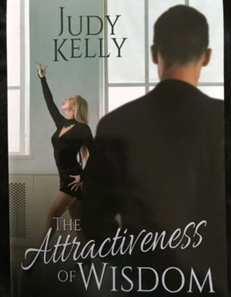
https://www.amazon.com/kindle-dbs/entity/author/B00I3KVGFM?

The Attractiveness of Wisdom, Winner, The Independent Press Award, 2022, and The NY Big Book Award, 2022. www.www.blackrosewriting.com.
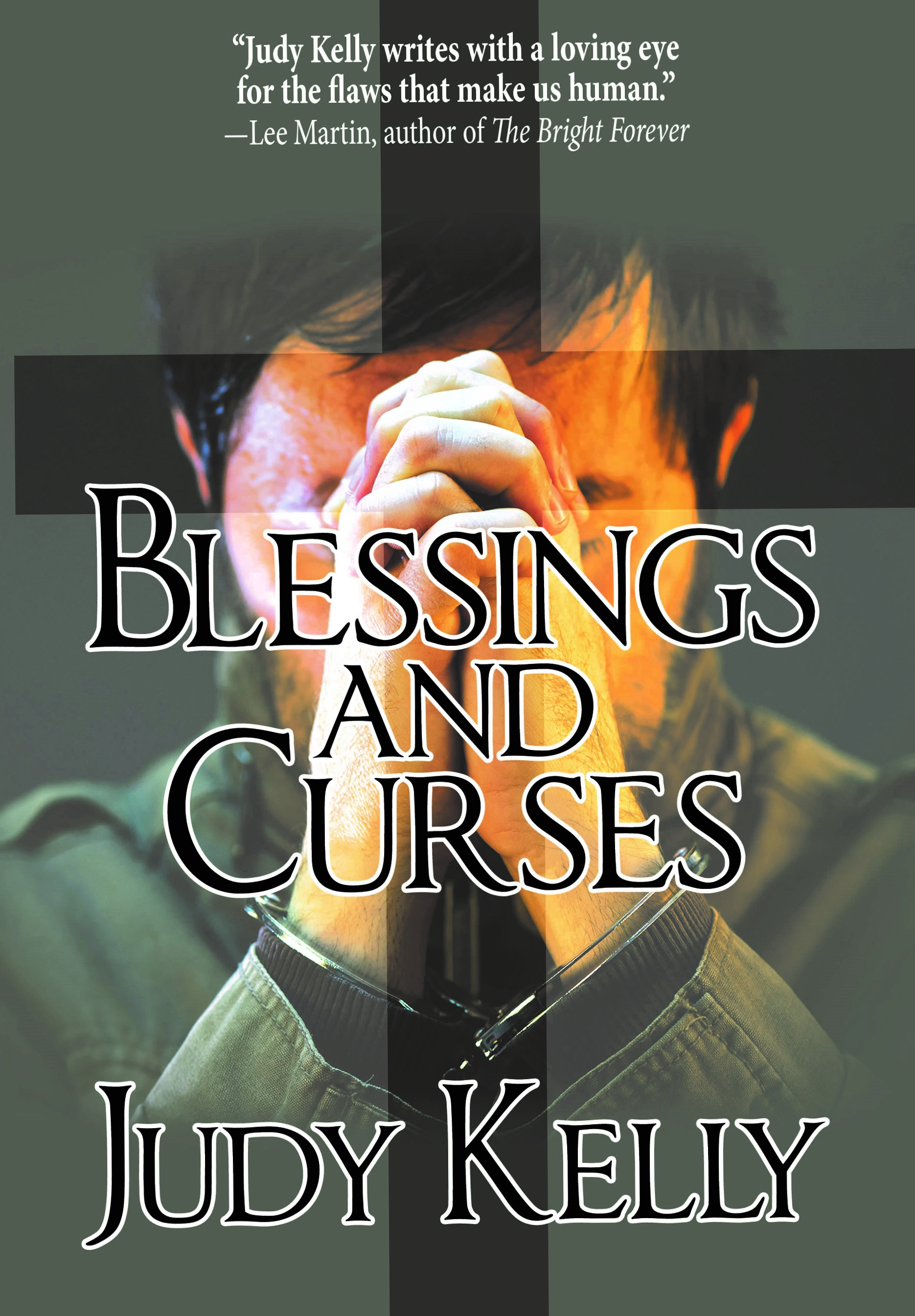
http://www.blackrosewriting.com and https://www.amazon.com/kindle-dbs/entity/author/B00I3KVGFM?

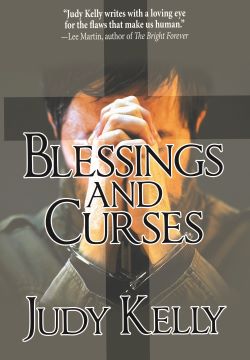
Blessings and Curses, Finalist in the Readers Favorite Award, 2020, also awarded Top Ten Most Popular Books in the Frankfurt, Sharjah, and Guadalajara International Book Fairs, 2018.

Love a Good Story

Here is another Good Story.

A Lost Friend

A friend called earlier this month to tell me how happy she was on one hand, but very sad and concerned. She’d reconnected with a long, lost friend. She said she hadn’t seen or heard from him, the guy she loved and dated for six years, since he told her he was getting married. After their relationship, they ended up being good and close friends for a year before he found someone else and devoted his time to her. As she talked, I wondered what it would be like to reconnect with someone I was close to years ago. Why the separation? How would I greet my friend? Would I feel guilty because I didn’t keep up with her or him? Would the friend feel guilty and shy away from me?

My friend said her friend had fallen on hard times after his first year of college. He lost his parents and didn’t have the money, so he dropped out of school after midway his second year in college. He tried to find a job, but no one hired him. He also married (another woman) just before he entered college, making his life more challenging. For the life of me, I don’t understand why her friend wouldn’t tell anyone, and/or ask for help.

He separated from his wife, leaving her the apartment. She had a part-time job, and he didn’t want her to support him on her salary. He continued looking for a job, but no one hired him. Before he knew it, he found himself living on the streets. Initially, he thought he would only be out of a home and on the streets for a week or two, but years later he was still living where he could, even in shelters, when he could. In the shelters, he always ended up being the victim of theft or some man trying to rape him. Frequently, he had to fight his way out of the shelter. Like homeless men, he chose to live on the street or find a corner no one knew about, which was unlikely. When he found a place, that place didn’t work out for various reasons.

My friend told me he told her he could never get enough to eat and taking food from places where the homeless could eat became a way of life. The workers in these food places understood and would, occasionally, bring him, and others, extra food. Other places only gave everyone a sparse helping of everything and the homeless had to leave after they’d finished for others to come in and eat.

In the fights, he usually ended up injured. These injuries had to heal on their own. Hospitals and clinics weren’t eager to take in a dirty, smelly man. He remembered when he was employed or in school, the times he came across a homeless person. He wondered why and how it happened. He’d never thought he’d be in a situation like that. Now, he can’t relate to being homed. He said, no one asks to be homeless. It happens when your life gets out of control, when there’s no job or money coming in; when no one can take you in because they don’t trust you; when you lose your home and all your possessions such as your personal high school graduation pictures and diploma, pictures of your family and your parents sitting by the fireplace in their beautifully decorated house, pictures of your siblings, your wedding pictures, the time you played baseball, the times you won the Spelling Bees in elementary school; your birthday celebrations, your Christmas presents, the birth of your child, and the family at the table eating with a large turkey in the center; and the lives of your relatives. When you are homeless, you take only what you will need. The rest of your life, you have to discard. It is because the homeless person feels left out of the life he/she once knew. They no longer belong to that life. They no longer have the life everyone else has.

He is now in a nursing home. Somehow, he qualified for service. How that happened may be another story. I didn’t ask about it. My friend said he barely remembers her and doesn’t remember their relationship or the things they did together. Isn’t this another way of coping? It would be better not to remember, not to think about all the good you had before the new life of homelessness. Why try to remember something you will never have again? The situation won’t change. Is he trying not to remember; refusing to let her in? How far should she go? How hard should she push? She doesn’t know. Is he waiting to see if she wants to be involved? Should she worry? She should follow her heart. That’s what I’d tell her should she ask. My friend is trying to jog his memory, but he stares at her with empty eyes and an empty heart as he shrugs his shoulders.

My friend is gravely disappointed to see this once vibrant man who with his energy for life filled her with happiness and vigor, who wanted to be a dentist, now dirty, his body filled with scars, bruises, cuts, and who suffers from inner physical problems and emotional insecurity and emotional problems beaten down by homelessness. My friend said when she goes near him, he automatically goes into a defense mode.

His wife, they never divorced, does not recognize him at all. This man may never be his true self again, the man everyone once knew and loved who had everything going for him. My friend said she can’t stop crying for the loss of her friend and confidant.

His wife feels guilty that she didn’t make him stay. She said they could have worked it out. She wanted to let him know he has a daughter. She didn’t know she was pregnant until after he left. She always wanted her daughter to meet her father.

Have you reconnected with a relative or someone you new years ago? What did you do? How did it turn out? Are you satisfied with the results? Is your friend or relative satisfied with the results? My friend needs to know what it is like for others. Please help her.

That’s all for now. Isn’t this a Good Story? Please comment. I would love to know your thoughts. Until next time.

Love a Good Story

I just finished dusting my piano because I wanted to play something, and it was pretty dusty. I don’t know what led me here. Maybe it’s because the piano needed, really needed dusting, or maybe I remembered how nice it felt to play music, the songs I played and the singing. I’m not good at singing, so perhaps that’s why I stopped singing. I admonish myself for disregarding my Yamaha piano, one of the best brands of pianos, and I promise myself I will never do that again. I lift the top and dust the ivory keys, making certain I find the dust balls between the black and white keys. I realize I have always dusted the piano, but until now, it never occurred to me to play again. I haven’t played regularly in over ten years. Oh, I stopped once or twice to try something, checking to see if it still works and if it is still in tune. A piano is not just a piece of furniture, the way I thought of it. It is an instrument, something that creates beautiful music. I touch the keys and play something simple. I can’t believe I even remember the notes. I touch the keys again and listen. I hear the most beautiful sounds, clear and whole. My piano always had such a beautiful sound (which gave me the illusion that I could really play). For a second, my mind goes back to the recitals and concert halls where I played pieces I’d learned. But that only saddens me, so I push that out of my thoughts.

          I don’t know why I stopped playing the piano. I also wanted to write novels. When I played, I spent the entire day at the piano, playing one piece after the other. Writing also took a full day. I had a choice between the two, and I chose to create stories. I look through all the music I once played and am surprised at the level I’d reached. I had accomplished much more than I thought or remember. I hope it will be easy to start again. I would like to start again.

          As a pianist, playing the piano encouraged changes that improved me. It allowed me to trust. A pianist must have trust in his/her playing. I had to know and trust the fact that the piano keys will always be in the same place every time the note is needed. The pianist knows that the sharps and flats will also always be in the same places. So, the pianist must trust, in this case herself, and know that the key is always in the same place, sharp or flat. It can be assessed by playing the note.

Playing the piano strengthens the memory. The pianist must remember the key and its location. The key is there, but the pianist must remember the key on the page and the key on the piano. The pianist must also know the other things in the piece, such as the whole notes, half notes, quarter notes, rests, and other directions in the music. In order to make beautiful music, the pianist must remember the directions and where the notes are on the piano.

Playing the piano taught me how to budget my time and keep to a schedule. This is important where there are other items on the calendar, such as a class, a dental appointment, a dinner engagement, and a variety of other things. The pianist must select what to play and put a time limit on how much to play and how long to play and when to stop.

Playing the piano gave me confidence to increase the difficulty of playing, such as learning how to cross one hand over the other, play a difficult chord, play in either the treble or bass part of the piano. The ease of managing this so that the piece sounds beautiful developed confidence in me. The pianist will not only accomplish the new but will accomplish other things in life that were never considered.

Playing the piano enabled me to widen my horizon and play other music genres, appreciating a variety of music types. More importantly, playing the piano is something that belongs only to the player. No one can take away the pianist’s ability. The pianist created a personal style, and no one can make playing the piano as important as the pianist made it according to that special style. The personal development, desire, love for playing and the skill and ability all belong to the pianist only.

So, there is a connection between playing the piano and life. It’s not just an interesting hobby, or only a way to relax. Playing the piano uses the same keys but generates different music. Life is not always the same. No one can count on the same events happening the same way all the time. The more skilled the pianist, the more the pianist can step outside what they have learned and go further, to go over and beyond. The more experiences we have in life, the more we can trust that we can step outside the box and expand ourselves.

Isn’t that a Good Story? That’s all for now.

Do you play an instrument, game, or anything that enabled your growth? Tell me about your experience. I would love to hear from you.     

Look for my novels on Amazon and/or Black Rose Writing.com                                                                                     

Blog – Love a Good Story

The heavens are telling the glory of God; and the firmament proclaims His handiwork.

Day to day pours forth speech, and night to night declares knowledge.

There is no speech nor are there words; their voice is not heard;

yet, their voice goes out through all the earth, and their words to the end of the world.  

The word for the month is: Putrefaction [pyoo-truh-fak-shuhn]; it’s a noun.

The process of decay or rotting, especially of organic matter; decomposition

Examples of putrefaction in a sentence:

The smell of putrefaction emanated from the decaying carcass in the forest.

Proper disposal of waste is essential to prevent putrefaction and the spread of disease.

Now, for the Good Story

This month, March, is my birthday month and I’ve been thinking about my mother. I miss her and sometimes I just stop and ask myself how she’s doing and if she remembers me. I think about the birthday cakes she made for each of us according to our personal taste. Mine was chocolate, no fruit. I lost her years ago. When I bring her to mind, I often think of those times we read together. When I was young, and before I went to kindergarten, my mother taught me how to read. Every afternoon, while she prepared the evening meal, I would gather the books in my arms and bring them to her. When she saw I was ready, she would turn the knobs on the stove, dry her hands on her apron, and amid the aromas of the baked chicken, her “special sauce,” she called it, and my favorite baked bread, we would sit at the kitchen table where she read fairy tales to me. I couldn’t get enough of the Princess and the Pea, The Snow Queen, The Little Mermaid, The Christmas Tree, and my favorite, Thumbelina. I loved being with her in the kitchen’s warmth, and her smile while she read. I loved the way she used her voice and made the action sound scary, or the people sound happy or sad. She made the stories seem real, as if the characters were sitting beside me listening to my mother read. I looked forward to our time together, just she and I. She was patient and understanding, especially when I asked her to repeat a phrase, or explain a happening in the story. Children that age ask the same questions repeatedly, and I was no exception. My mother would relay the same responses from the day before and the day before that, all the while smiling and saying things like, “You remember that. I know you do.” Being with my mother reading to me made me feel valued, loved, and brought me closer to her.

            Thumbelina is a story about a little woman who was the size of a thumb. I couldn’t imagine anyone being as small as a thumb. To help me understand her size and recognize the name Thumbelina, my mother took a thimble out of her sewing kit and put it on my thumb. Every time she read the story, I wanted her to put the thimble on. I could now “see” the size of this little girl and understood how small she was. My mother would ask me things like: What’s Thumbelina doing now? What does she want? Her way of making sure I understood the story. Thumbelina liked and helped the other animals as she encountered them and, by seeing who they were, she came to discover herself and what she wanted. She also exhibited independence and, though she was different, she did not see herself as “less than.”

            One day, my mother changed our routine. “It’s your turn to read to me. Read Thumbelina,” she said. I was surprised. I didn’t know how to read. “Mommy, I don’t know how to read,” I said. “Oh, yes, you do.” She picked up the book, Thumbelina. “I’ll show you.” She read a line, pointing to each word as she said it, and I read the same line as she pointed to each word. She had me read that way through the entire story. Then she asked me to read the story while she listened. I couldn’t believe it when I read the entire story with only a little help from her. She gave me the biggest smile that afternoon that made me feel like the best little girl on earth.

However, I still asked the same questions, and she still answered them. The thimble on my thumb enabled me to understand dimension, the size of things, the depth of concepts, what’s true and what’s not true. Asking me to read brought another dimension to my reading and our relationship. I was not a baby anymore. I was a little girl growing up loving stories.

            As I grew, because of her encouragement during my early years, I was and still am a ferocious reader. In middle school, my teacher told me about library cards. I asked my mother what these cards were, how to get one, and how to use it. She explained a card would enable me to borrow books from the library. I knew right then I had to have a card.

The next day, while I was in school, she called the library and arranged for me to get a library card. When I came home from school, she sent me to the public library to pick up my card. I entered reluctantly, and instead of heading for the front desk, I saw books everywhere, so I headed in that direction. I wasn’t overwhelmed; I was overly excited. Books, books, books everywhere. I couldn’t wait to get started. Where should I begin?

A lady came over to help by showing me the books for middle school students. I asked how many I could borrow and took that amount to the front desk, as she asked me to. The lady at the desk said I had to return the books in two weeks, so I should think about borrowing fewer books. I told her I was fine. I took the books home, gave one to my mother, the one I picked out for her, and took the rest to my room. I did my homework first (something my mother always asked of me) and then I started reading my novels.

            When I returned the books, the librarian looked at me over her glasses. “You know you can always renew them if you haven’t finished reading them.” I smiled and said, “I’ve finished reading them. I want to borrow more.” She removed her glasses and looked at me as if she didn’t believe anyone my age could read three books in two weeks. I read all the time. I was hungry for knowledge. I wanted to know about people, objects, and places. I would find out the state where a city was located or where a country was located. I’d research the customs of people and places in another country. I even found differences in the north and south of America. (I don’t think there’s much difference today given how often people move around, but when I was young there was.) At night, I would read in a corner of my room with a blanket over my head and a flashlight. I don’t think I fooled my mother or father. When I was older, my father mentioned it.

            My mother predicted that I would be a teacher and someday be an author. Today, I am an award-winning author of three novels. I taught elementary school, middle and high school and am now a professor at a two-year college.

            Fairy tales are on the banned book list. I don’t know whether Thumbelina is on that list. I bought the book. I wanted the large picture book for children, like the one I had but, Thumbelina didn’t come in the children’s big book. It is An Illustrated Treasury of Hans Christian Andersen’s Fairy Tales. As I read the contents, I recognized other books my mother and I read together. Thumbelina stayed with me because of the thimble my mother put on my thumb. Fairy Tales are stories that are not true, but truth is embedded throughout the stories. If we only read the words, we won’t find the deeper meaning or the depth in the story. If we “read” what’s beneath the story, we may find a wealth of meanings. I love stories with deeper meaning. Fairy tales have deeper meaning.

Isn’t this a good story? I hope you enjoyed it as much as I enjoyed writing it to you. Do you have a good story? Tell your story. Don’t forget to use putrefaction in a sentence and send it to me. I would love to see what you’ve done with that word. Keep it clean now.

That’s all for now. I look forward to being with you in April. Meanwhile Follow me on Facebook, Twitter, and LinkedIn, and please visit my website: www.judycar.com and see what’s there. Follow me there as well. Don’t forget to read my novels. I know you’ll love the stories.

The Attractiveness of Wisdom, Winner, The Independent Press Award, 2022, and The NY Big Book Award, 2022.

Blessings and Curses, Finalist in the Readers Favorite Award, 2020, also awarded Top Ten Most Popular Books in the Frankfurt, Sharjah, and Guadalajara International Book Fairs, 2018.
Love A Good Story

Dear Artist of the Universe, Beloved Sculptor, Singer, and Author of my life, born of your image I Have made a home in the open fields of your heart. The magnetic tug of your invitation to grow is slowly transforming me into a gift for the world. Mentor me into healthy ways of living.

             By Macrina Wiederkehr

Last month I asked how you keep yourself safe. Did you send in your comments? Here are ways some people keep themselves safe:

           My husband makes me feel safe and validated.

          A good friend gives excellent advice whenever a problem arises.

          Some pray when they are afraid or don’t feel safe.

          Some have a group of friends that make them feel safe.

          Some turn to their fathers and/or mothers for advice that keeps them safe.

          Some have family gatherings that help them feel safe and wanted.

Some have family members in other states or who have passed away, and they don’t feel very safe.

The word for the month:  cantankerous.

Cantankerous is an adjective and means bad-tempered, argumentative, and uncooperative. It is often used to describe or applied to people, especially regarding their behavior.

 So now for a Good Story or a Really Good Story

          Early College Students. Have you heard about Early College Students? Have you wondered who or what kind of student is an Early College Student? Until I was given a class, I had no idea that such a thing existed. An Early College Student is an eleventh (11th) grade student who is enrolled in his or her high school and simultaneously enrolled in the first year of college. The student must have good grades and a GPA and must apply for the program. They usually begin their college career in a two-year college in order to get them acclimated to the college environment. They quickly come to realize that college life in a two-year college is very different from high school. They stay through the twelfth (12th) grade and the second year of college, where they, after completion of the two years, earn an AA degree and their high school diploma. During their second year at the college, they apply to a four-year university where they complete the final two years and earn their bachelor’s degree. 

          I was totally against this program when I first heard about it. High school is a time for growing, learning about oneself, and bettering oneself. High school teaches so much, even though much of the teaching seems negative during the high school years. For example, a female student whose boyfriend – the boy she thought was her boyfriend – who is disloyal and sees other girls, teaches the female how to respect herself and not worry so much about someone whose values differ from her values. We eventually learn these things, and use them later in life, probably when we encounter the experience again. An injury in high school, such as a star football player, who can no longer be the star, teaches the boy what is important in his life. Almost every experience we have in high school teaches us to grow, understand ourselves and causes us to be better people. We don’t see this while we are in high school and going through these experiences. It is a stage in life that I always felt everyone had to pass through, or for some, endure. The value of this learning comes when we need it and when we are older. What about the prom and the “grand to do” about who will be the prom queen and who will she ask to be the king? We learn tolerance from this and the fact that the king and queen are only the king and queen at the prom, which occurs at the end of the school year. But we also learn what we want for ourselves, what’s important to us, and being popular is a high school only concept. Almost everything we didn’t say or didn’t do, said or did, is a learning experience in high school. These Early College Students, because they are in a college, will miss out on this growth period when they join this program.

           What happens later in life for these students? The students I had in my classes were focused on their classes. They were all very brilliant students. It would seem that they were mature enough to manage those missing high school experiences. They also seemed like studious students who ordinarily would stay to themselves in high school, missing out on those experiences enabling growth and helping them find out who they are, the values and beliefs they hold, what they want for themselves and who they select for friends. Those students in my classes had already figured out what they wanted for themselves, knew who they were and had a path for themselves. These students were creative, ambitious, and outstanding in every way.

          When I had my first class, I began to understand the need for this type of class. These students take all of their classes at the college and the group stays together from English to biology, to math, and the other classes, like they would in high school. They would often leave to take tests at their high school, but generally, they were together. This was a good idea since putting them in classes where they didn’t know anyone would cause these students to be more apprehensive and feel they were being matched with adults. Keeping them together was important because high school students group themselves with their friends, especially if they live near each other. They form a large group of friends, and then they pair off into smaller groups. In college, students do not group of pair off. It is also not likely that they live near each other.

The students in my classes liked each other, so I did things in class that kept them working together and in groups to rely on each other, both in and out of class. These high school students were amazing. The work they turned in was incredible. These students applied deep thought to their assignments and projects. They were creative and information thirsty. They were phenomenal. Toward the end of the semester, the students matured more. I was worried about their growth, but they grew and natured more.

If your child qualifies for this program and you and your child feel he/she can manage it, sign your son or daughter into this program. I recommend it. There may be other things in your child’s school, so find out what those programs are and see whether they are right, or better, for your child. But please, please, please. Don’t force your son or daughter to enroll by signing them up for something they don’t feel they can manage. Children don’t want to disappoint their parents. The idea of failing something the parents wanted can stay with the student for the rest of their lives, for some. It will keep them afraid to “step out of the box” and they will not depend on themselves or think well of themselves.

Please let me know your thoughts on any of these programs. I want to hear what you think and what you have done so far.

Send a sample of how you used the word cantankerous, either in your writing or in your daily conversation. Send it to: www.judykelly@judycar.com and follow me.

          Isn’t this a Good Story? Below are two other Good Stories. Give them a read. Take good care. Until next time.

Love A Good Story

            First, I’d like you to know that I am back. Over the past year and a half, I have had my share, and the share of several others, it seemed like, of challenges with my home, my car and my health, all at the same time. I declare myself to be finished with all of that so I can get back to you. I missed writing to you and receiving your comments to me as well. So, with all that behind me, let’s focus on Love a Good Story.

            I get a Word of the Day that I sometimes use. So why not send you a word for the month. You may be able to use the word as well. The word for this month is:

Circuitous [ser-KYOO-i-tuhs]   1. Having a circular or winding course; not direct

Examples of its use:

  1. The mountain trail took a circuitous route, winding through dense forests and crossing streams.
  2. The circuitous explanation confused the audience, who expected a more straightforward answer.

Here’s another good story:

            Last summer, two foxes found their way into my backyard. We don’t have alleys where I live and I am in the middle of the street, which means that the foxes and deer have to come from other yards before jumping the fence and entering my yard. Once they get to my yard, it was easy for them to find their way back when they left. I guess that’s why they kept returning. When I would see these two foxes in my yard, I would take a broom and swing it around, yelling for them to leave, as I bravely approached them. They, frightened by my maniacal behavior, would try to jump the fence and get away. Yelling and swinging the broom, I gave them the extra time they needed to jump the fence. One, after about three of four tries, would get over and the other would keep trying until he or she made it over the fence and into my neighbor’s yard. One day I watched one hide in my Hosta plants that had grown and spread out. About an hour later, he or she came out of the bushes, yawning. That reminded me to be more cautious when I had to weed.

Fall came, and they left. It was a surprise. I thought they would stick around. I looked for them daily, but they didn’t return in the fall or winter. Then, spring came, and the two foxes returned. I think deep down I missed my friends, and I finally realized I wasn’t yelling at them to leave. Instead, I worried about them. Where did they go in the winter? Whatever they did, they made it back to my yard..

 Early one summer morning, I opened the door to my back deck and heard this scurrying noise. The two foxes were on my deck, sleeping. When they heard me opening the door, they ran down the steps to the back of the yard to jump the fence. That’s when I noticed the fence was a little too high for them to jump over. They saw me coming toward them and in a panic, the first one kept trying to jump over until he/she did. Then the other tried and tried and tried and finally made it over. My neighbor’s backyard is not fenced, so they found their way out.

Since they were on my deck, which is much too close to the inside of my house, I decided to check my deck as soon as I got up every day. Early in the morning, I found them not only on my deck, but sleeping together in a cushioned chair. One was curled inside the other. They were so cute; I wanted to take a picture of them. But I stood there inside, watching from my window. They seemed comfortable. They weren’t hiding. They were out in the open in a chair on my deck, sleeping. They just wanted to be safe; to sleep and feel safe doing so. Isn’t that what we humans want, too? We want to feel safe, especially with what’s happening today in our city and around the world. The foxes heard me walking around in my house, so they got up out of the chair and ran down the steps to the back of the yard to jump the fence. This day, as they tried to jump over the fence, they watched me. The first one stopped for a minute, watching to see what I would do. I shifted my weight, and the fox tried again and made it over. The second fox continued to look at me, then tried to jump over the fence. I encouraged him or her to try again. He or she did and finally made it over the fence. Instead of running away, they both stopped to look at me for a while. I asked them to stay together and look out for each other. It was at that moment that I understood the foxes.

Foxes are small animals. They are the size of small dogs. In fact, bigger dogs are much bigger that a fox. A fox is always on the alert. They have to be ready. They are the prey. The two foxes who slept on my deck, in my chair, were just looking for peace; a place where they could sleep without being chased away, without another animal trying to take their life. They must be tired of running, tired of hiding, and tired of trying to find some place safe. They were just looking for a place to relax, a place where they could be calm and free of worry about staying alive. They have no other fox or person to help them. They must depend on themselves.

Foxes are not the only ones who worry about things. Where do you go to feel safe? What do you do when you are worried about something? Do you have someone to turn to? How do you manage your worries? I know what I do, but please let me hear from you. What do you do?

Please let me hear from you. Also, if you’ve used “circuitous” in your story or in a writing, please send that as well. I look forward to hearing from you.

Please contact me at:  judykelly@judycar.com or respond to the bottom of this page.

Love a Good Story

Merry Christmas Everyone

Love a Good Story. I just Love a Good Story. Don’t you just Love a Good Story? Here’s another good story.

Hello, from the Maddox family, Eric, Anna, Jeremy, HolliAnne, and Hamilton in Judy’s latest novel, The Attractiveness of Wisdom. We wish you all a Merry Christmas.

Jeremy, my youngest, sends you a special blessing.

                             The Lord bless you and keep you;

                             the Lord make his face to shine

                             upon you, and be gracious

                              to you;

                             upon you and give you peace.

                             the Lord life up his countenance

Numbers 6: 24-26, The New Oxford

This is the first Christmas in almost three years that many have felt at liberty to visit others or participate in activities. Please everyone, make this a momentous holiday. Appreciate those around you by saying nice things to your family, friends, and strangers and doing nice things for your family, friends, and strangers. Let this time with them be stamped with love and happiness.

If you are looking for Christmas gifts, why not gift your friends and loved ones The Attractiveness of Wisdom? I know they will love you more for your kind heart.

Read this wonderful story about the Maddox family. Don’t forget to email me and let me know what you think and go on Amazon to post a review.

www.blackrosewriting.com

Also, enjoy my podcast with Gabby as I talk about The Attractiveness of Wisdom.

https://www.independentpressaward.com/thegabtalksaudioonly/the-attractiveness-of-wisdom

The Independent Press Award magazine is magnificent!! If you are not sure which other books to buy, please order the magazine. Remember, if you order The Attractiveness of Wisdom, send me a copy of the invoice, you will receive a link where you can have the magazine free. And, to my surprise, my book is in the magazine.

Merry Christmas from Love a Good Story


Merry Christmas Everyone


Love a Good Story. I just Love a Good Story. Don’t you just Love a Good Story? Here’s another good story.

Hello, I’m Hamilton Maddox, the main character in Judy’s latest novel, The Attractiveness of Wisdom.

I realize you haven’t heard from me, though you’ve heard from my sons and daughter and my parents. I implore you to read The Attractiveness of Wisdom because it’s a story of not only me and my family, but also of Judy. In the story, I didn’t realize the impact I had on others. It’s important to me that I see that now. Read this wonderful story. Read about the strength and power of love and the effect love has on us all.

If you are looking for Christmas gifts, why not gift your friends and loved ones The Attractiveness of Wisdom.? I know they will love you more for your kind heart.

Read this wonderful story for yourself and see. Don’t forget to email me and let me know what you think and go on Amazon to post a review.

https://www.judycar.com

www.blackrosewriting.com

https://www.amazon.com/kindle-dbs/entity/author/B00I3KVGFM?

Also, enjoy my podcast with Gabby as I talk about The Attractiveness of Wisdom.

https://www.independentpressaward.com/thegabtalksaudioonly/the-attractiveness-of-wisdom


The Independent Press Award magazine is magnificent!!

If you are not sure which other books to buy, please order the magazine. Remember, if you order The Attractiveness of Wisdom, send me a copy of the invoice and you will get a link where you can have the magazine. And, to my surprise, my book is in the magazine.


Go back

Your message has been sent

Warning
Warning
Warning
Warning

Warning.


Love a Good Story

Merry Christmas

Love a Good Story. I just Love a Good Story. Don’t you just Love a Good Story? Here’s another good story.

A few weeks ago, someone asked me the meaning of the title of my novel, The Attractiveness of Wisdom.

The title, The Attractiveness of Wisdom, comes from the Bible. In the Bible, Wisdom is a lady. In the story, Hamilton’s change comes from his interactions with three women. Each of the women offers him a new way for him to see himself and empowers him to change. The title represents the good or the positive that comes from being wise, knowing yourself and understanding what you need.

Read this wonderful story for yourself and see. Don’t forget to email me and let me know what you think and go on Amazon to post a review.

www.blackrosewriting.com

Also, enjoy my podcast with Gabby as I talk about The Attractiveness of Wisdom.

https://www.independentpressaward.com/thegabtalksaudioonly/the-attractiveness-of-wisdom

The Independent Press Award magazine is magnificent!! If you are not sure which other books to buy, please order the magazine. Remember, if you order The Attractiveness of Wisdom, send me a copy of the invoice and you will get a link where you can have the magazine. And, to my surprise, my book is in the magazine.

Love a Good Story Happy Thanksgiving

Love a Good Story! I just Love a Good Story. Don’t you just Love a Good Story?

Here’s another Good Story.

Two weeks ago, when I sat down to write this. I wanted to write about all the ugly things happening in this country. I wanted to just let out my thoughts and feelings, without care, and what I would say about some people. I just wanted and still want to let off steam. I wanted to express my views on immigration, sexual orientation, teen violence, covid-19, the “I” generation with their personal rights, and a host of other problems we seem to have. But I changed my mind (remember, I’m a woman, and that is my right). In a previous blog on my website, (you may want to go and read it) I gave you a history of Stevensville, the place where my main character, Hamilton, in The Attractiveness of Wisdom, grew up. In the novel, Hamilton lives in Rockville, Maryland. Instead of the “downer” story, I thought it would be nice to give you a little history of Rockville. I think you will find it interesting.

If you are like me, hearing or reading the word “history” is a huge turnoff. But see history in terms of storytelling. That can make a difference. So, this is a story about the changes and growth in Rockville, Maryland.

By now, we should know that the first people who lived in this country were who we have identified as “American Indians.” The country was not named “America” at the time. We should also know that Indians would like to be identified by their tribal names, rather than American Indians. The number of tribes in this country, at least two thousand years before anyone other than tribal people arrived was well over two hundred. I don’t want to get too much into this history, but some either don’t know this or they treat it the same way they do the Holocaust, Slavery, Internment of Japanese and Covid, as it did not exist. There is evidence, and much of it, that the Indians walked the very ground you are sitting or standing on now, centuries and centuries ago. I heard someone being interviewed on the news some time ago, say that “this country was founded by immigrants.” That is not true. This country was already founded; it was already occupied by the many Indian tribes who had made this country their home for many centuries. They lost their lives and land to invaders and many Indians had to flee their homes and move to Canada, Mexico, and South America.

Indians created paths in Rockville as well as many other places, where they walked and hunted. In the 1700’s people who came to this country saw the paths the Indians took. In the central part of this country, Indians followed the buffalo for food, clothing, and shelter. They travelled from the east coast to the west coast and back again according to the change in weather. They were more nomadic.  Some of the streets and roads we now drive or walk on may have been a path travelled by the Indians.

Rockville was a small settlement of over 50 people and was originally called Owen’s Ordinary when General Edward Braddock’s troops marched through in 1776. By 1774 the place was referred to as Hungerford’s Tavern. After 1776, at the founding of the county, most people called it Montgomery Court House although it was officially named Williamsburg.  The Williams family offered lots for sale adjacent to the courthouse and by 1801 the name was changed to Rockville after Rock Creek. The town was incorporated. So, Rockville had several names before it was finally given its name Rockville. What do you want to bet that Hungerford’s Tavern was a gathering place where men drank beer and ale. Can’t you just see these soldiers gathering at Hungerford’s after a hard day of fighting Indians and drills?

The early settlers were English (of course), Scotch and Irish. In other words, the UK or almost. At the various times they arrived, they scattered over the county and most of the little communities they started such as Barnesville, Brookville, Laytonsville, Poolesville were not as large at Rockville.

Rockville is the county seat in Montgomery County. Many people worked in D.C. and commuted from Rockville. Rockville is still one of the major places where people live, but work in Washington, D.C.  These people are professionals interested in governmental and civic affairs. They are well educated and professional. I don’t think this holds true today. At the time, many Marylanders were not native Marylanders, and they brought political philosophies to the state.

Rockville was and still is an interesting place to live for some. The city has changed greatly since it was founded. Lewis Reed of Reed Automotives stated: “More than 250 years ago, land grants to European settlers formed the nucleus for today’s Rockville, Maryland. By the 1750s, local farmers were transporting tobacco to market in Georgetown down a road formerly used by Indians. The tiny settlement was designated as the seat of the new Montgomery County in 1776. Known as Rockville by 1803, the town’s life centered on Courthouse activity. More homes and shops were built, and the town of nearly 600 was incorporated in 1860. The dynamics that created Rockville in the 18th and 19th centuries are still the same ones attracting newcomers today: the presence of county government, a favorable location close to the nation’s capital, converging transportation routes that bring people here, and identity as an independent municipality.”

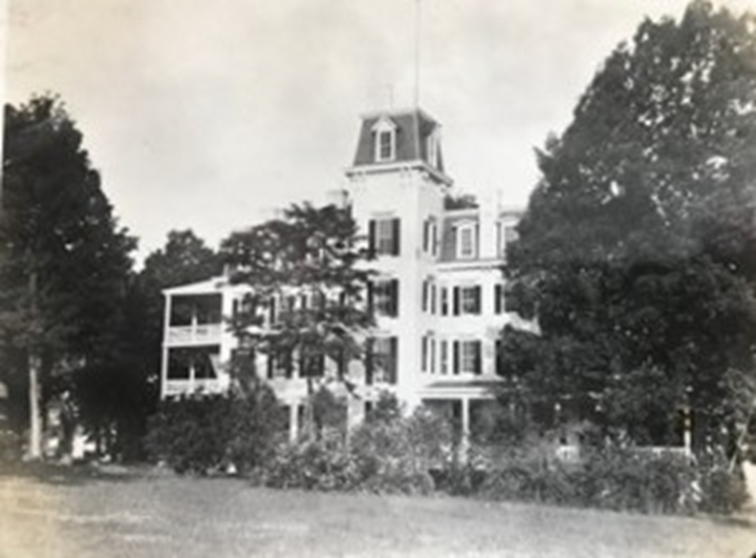
Did you know Rockville was a resort town? Well maybe that’s a slight exaggeration, but “Chestnut Lodge was a focal point on historic West Montgomery Avenue. Opened as a luxury hotel in 1889 for Washingtonians seeking to escape the city’s summer heat, the hotel thrived until the economy and more accessible transportation made Rockville a suburb of Washington rather than a summer vacation destination.” Everything changes, huh? Reed goes on to say, “The hotel was then purchased by Dr. Ernest L. Bullard who reopened the building, naming it Chestnut Lodge, as “a sanitarium for the care of nervous and mental diseases.” F. Scott Fitzgerald’s wife, Zelda, stayed in the sanitarium in Rockville. He took the long drive (about 45 minutes) from Washington, D. C. to see his Zelda almost every weekend.

“The Bullard family operated the nationally famous Chestnut Lodge for 75 years. It was closed only three years later. The building was conveyed to a developer in 2003 with the intention of converting it to condominiums as part of the development of the Chestnut Lodge property.” I drive by the exact corner where this sanitarium was located every time I use 270. “Sadly, a fire on June 7, 2009 destroyed the landmark building that began as Woodlawn Hotel and came to symbolize the psychiatric institution of Chestnut Lodge. Today, the Chestnut Lodge campus is preserved for the community and consists of Little Lodge, Frieda’s Cottage, a Stable and, an Ice House, and eight acres of forested lawn.” But it is not that today.

According to the history put together by Lewis Reed, “During the first two decades of the 20th century, the pace of growth slowed considerably. Between 1900 and 1920, Rockville’s population grew by only 45 persons. However, amenities available in urban areas came to Rockville in this period—electricity, telephones, indoor bathrooms, a sewerage system, trolley cars, a town park, and street trees.”

“The years after World War II were phenomenal ones in Rockville. The population swelled from 2,047 in 1940 to 26,042 in 1960. The newcomers to Rockville included WWII veterans and their young families who purchased starter homes in new subdivisions, including Hungerford Towne, Twin-Brook, and Montrose.” I live near these areas. The homes were small then, but many people have added on to those homes making them more attractive and of course, larger. The decade of 1950-60 proved pivotal for the area, as much of the old disappeared and the new was being constructed.

Unfortunately, building in Rockville continues. But look at the past. If you have been to Rockville, just think that just a little before you were born, the city was very different.

This is the Woodlawn Hotel. Wouldn’t it be nice to vacation here?

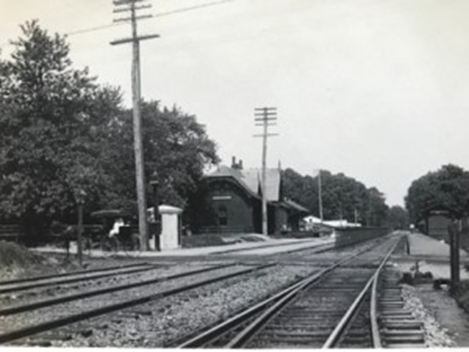
Rockville B&O Train Station early 1900s. On the left, a horse-drawn carriage has just left the station. Photo by Lewis Reed.

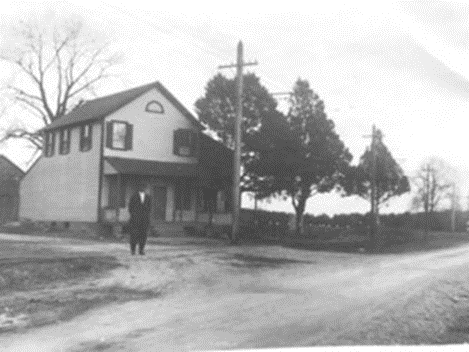
Halpine-Lenovitz General Store, 1906

“The Halpine Store, also known as the Lenovitz General Store, was built on Rockville Pike in 1898, taking advantage of the prime location on the trolley and railroad lines and the Pike. The store sold food, gasoline and other items to locals and Pike travelers. Note the telephone or telegraph poles, and the trolley tracks paralleling the road. The nearby Halpine railroad station also brought customers to the area, and the store became the social/community gathering place for the Halpine area.”

How many times have you passed this place?

Halpine-Lenovitz General Store at Rockville Pike and Halpine Road. Photo taken by Lewis Reed, circa 1906.

Rockville High School, 1911. Photo by Lewis Reed.

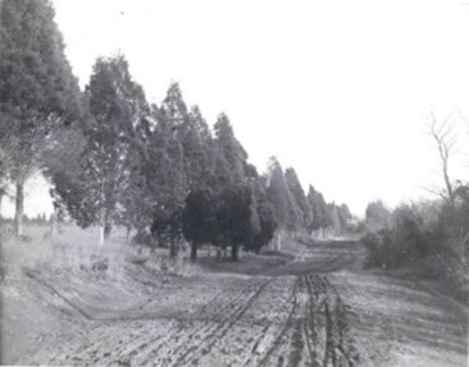
Veirs Mill Road looking east prior to paving. Photo by Lewis Reed, 1911.

What does this say, Veirs Mill Road in 1911? This is only one hundred and eleven (111) years ago.

Veirs Mill Road, 1911

“The popularity of the car coincided with the improvement of public roads around Rockville. Rockville Pike’s reputation as “one of the worst pieces of main highway in the state” helped initiate Maryland’s Good Roads Movement. Responding to citizen demands, the newly created State Roads Commission incorporated the Pike into the state highway system. By 1929, when Montgomery County residents owned 13,000 cars, the Pike and Montgomery Avenue had been paved, but less traveled Veirs Mill Road remained a narrow dirt road for decades.”

Veirs Mill Road is a main street now running from Georgia Avenue in Wheaton and ending at Rockville Pike in Rockville. It continues to be crowded and the 13,000 cars and more must all use Veirs Mill Road during the times I use it.

I wonder what the founders and those who lived here in earlier times would say about Rockville now? Would they like it? See it as a better place to live now? Think they were the ones better off? Today, we have people jammed tightly in small communities, as opposed to being spread out. I would think that would be hard for those who lived before us. There are apartment buildings that take up entire city blocks. You don’t have to worry about a place to live because there are townhouses, condos, and single-family developments everywhere you look. If you can afford it, it’s yours. How about when we go into stores in Rockville we are plagued with long lines and customers who always seem to have special problems that impose on others who are waiting their turn. I think those who lived before us would make a comment to the person holding up the line, bringing to the person’s attention that they are being inconsiderate. And what about cars? Should I bring that up? There are too many cars on the roads. So many that driving is dangerous, especially when people are on the phone, eating, eating soup (I’ve seen that so many times. I hope the soup is not hot.) Cars (including SUVs and trucks) are everywhere. It is even difficult for a homeowner to park in front of his/her house.  I don’t think those who came before us would appreciate this either. We no longer pride ourselves on the fact that we are educated and professional people because we have too many people who are not educated or professional or who live in poverty in Rockville. Progress does not always mean something good. Instead of saying progress, we can say “change.” Rockville has certainly changed from the ideas and principles that began this city.

Wasn’t this fun? I found it very interesting and to know that just 111 years ago Veirs Mill Road was a dirt road is amazing. Someone saw this change in their lifetime. And just so you know, I am not speaking of myself. This area has certainly changed since I’ve known it. History is something we all experience. Some events seem more important or historical than others, but history is what we live in and what we help create. History is exciting!

I thank you so much for allowing me to bring you this history instead of what I had planned. I hope you are calm, more relieved, and more at peace. You have given that to me. Focusing on something good, positive, and interesting does help.

Reading won’t hurt either. Reading makes a nice “get-away” as it takes you into a world of fantasy. Enjoy reading. You can get my novels here: Send me an email and let me know what you think.

That’s all for now. Purchase your copy of The Attractiveness of Wisdom and/or Blessings and Curses. Go on to my website as well. Don’t forget to send me an email. Take good care and many Blessings.

https://www.amazon.com/kindle-dbs/entity/author/B00I3KVGFM?