Love A Good Story

I just Love a Good Story. Don’t you just Love a Good Story? Well, here is another Good Story

You Get Your Novel Yet? Hurry Up. Or You’ll Be the Only One Without

Now that fall is ending and winter will arrive soon, you will have more time to read some of the books waiting for you. Can you see yourself in your most comfortable “stay at home” clothes, a warm blanket over you as you curl up in your favorite cushioned armchair. On the table beside you, sits your tall glass of water, or lemonade or your favorite drink. You reach for the glass for a sip before you begin. Then you set the glass down on the table. You pick up the novel that everybody has been talking about, the one you can’t wait to read, and open it to the first page. You look over the page and wonder why it’s taken you so long to read this story.  All the reviews for the novel are good and now, the novel beckons you to open it. You turn to the first page and read,

           “On the day after Olivia Douglas had completed her requirements at the Virginia Seminary, she made an appointment to see her parish priest, Fr. Wilson.”

Finish reading this wonderful story. See what happens. Why did she need to see Fr. Wilson? Read why everyone loves it and why to you, it’s a must read.

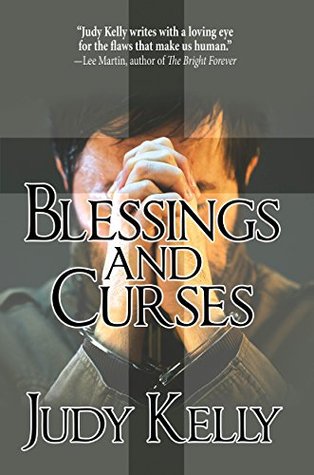
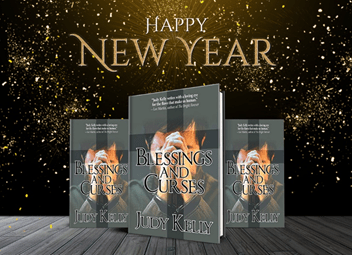
What if the darkest secret you carry isn’t a flaw, but a key? You feel it too, don’t you? That hidden fear that you’re not good enough, that something is fundamentally wrong.  For one woman, that fear has a name: a curse. But when she’s sent to the one place no one finds grace—death row—she discovers that confronting the darkness in others might be the only way to face her own. This isn’t just a story. It’s a journey of redemption that will have you questioning everything you believe about good, evil, and the power of choice. Find out if a curse can be broken.

Discover ‘Blessings and Curses’ today! #PsychologicalFiction #BookLovers #RedemptionStory #FamilyDrama #NewBook Page

http://www.blackrosewriting.com

                                                         www.Amazon.com/judykelly


Love a Good Story

Well, here is another good story.

Who is Your Neighbor?

How would you describe your relationship with your next-door neighbor(s)? Do you know the person or family? How long have you lived next door to your neighbor(s)? Do you speak or engage in small talk as you both are coming and going? Do you just say “Hello?” Do you look the other way?

                Since I have lived on my street, I understand what it means to be a good neighbor. We had a perfect example of a good neighbor, but he recently passed away in April 2025. He was what I consider a good neighbor. This man helped almost everyone on our cul-de-sac and those around the corners. This wonderful man got to know his neighbors by helping them with repairs in the homes or cars. My friend loved cars, and he was eager to help anyone with their car; give it a good wash or battery charge, or just about anything. He waved and blew his horn every time he saw another neighbor in their yard or on their way in or out of their house or cul-de-sac.

                This reliable person shoveled snow from our driveways and sidewalks. The first time I heard him outside my house shoveling the driveway, I came out to help. Other neighbors did the same thing, and before we realized it, with his lead, we shoveled snow from each of our driveways and the first space on the street. Each time it snowed, we would all gather in the arc and begin shoveling snow. Who would have thought that shoveling snow could be so much fun?

                In the spring and summer, we would meet in the arc and talk about our plans – what we accomplished during the winter, and what we had left to do. We talked about our families, vacations we planned, and how any of the other neighbors were doing. Sometimes one of us would be in our yard planting, or working, and instead of meeting in the arc, we met in their yard. My friend was always present and kept us going year after year.

During the fall, my friend raked my next-door neighbor’s leaves, my leaves, cleaned out the gutters of our houses, and trimmed the bushes for us. He also helped the people behind us on both sides of the street. He loved to help people, and we loved him for his love and kindness to us.

One time, he told us that our neighbor three doors down had to go to the hospital. We got together, picked a day and time, and visited him. Our neighbor was so happy to see us–his neighbors coming to visit him. He even sat up to greet us when he saw us all heading his way. His wife was so excited she didn’t know what to say.

I miss my neighbor, Chris, and all the other neighbors who lived in the cul-de-sac but moved away. The police officer and his family, who lived across the street, moved further north to be with their daughter. The lady next to him was placed in a nursing home due to the seriousness of her dementia. The family before Chris moved to a larger house. The lady on my left was placed in a senior center.

I miss the good times we had, the way we relied on each other, and the way we loved each other. My next-door neighbor on my right, who lasted the longest, lost her husband about fifteen years ago, and now she is in a nursing home. Before she was placed, she and I continued our get togethers in her yard or my driveway. The For Sale sign that has been in her yard for the past two weeks has been taken down. Today, there is a different car in the driveway. I am the last neighbor of our group.

The neighbors now are different. We just live next door to each other or across the street or two, three, four houses down. Before Chris moved into the neighborhood, we were all friendly toward each other. We said hello and waved and even stopped to help carry a bag.  After Chris moved in, he showed us how to enjoy each other; how to value each other. As I look back now, I am certain I’ve valued all my neighbors.

What does it mean to be a good neighbor? Who can be a good neighbor? Are there any special requirements? Does a neighbor have to be respectful, kind, thoughtful? Does a neighbor have to live next door? Who is a good neighbor?

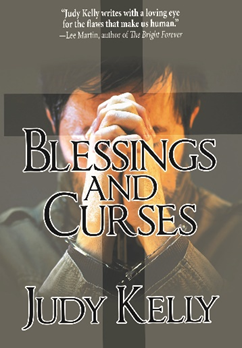
See who is a good neighbor in Blessings and Curses. Read Blessings and Curses.

They sent me a preacher girl. She walks in here, all clean hands and quiet prayers, thinking she can save my soul in two weeks. She looks at me and sees a monster. Fine. I am. But I see something in her, too. A shadow behind her eyes that she tries to hide. She thinks she’s bringing God into my cell. She doesn’t realize she just walked into a memory she forgot she had. This isn’t her mission. It’s her history lesson.

 Ready for a story that blurs the line between sinner and saint?

Read ‘Blessings and Curses’. #BookSuspense #FamilyDrama #Redemption #CharacterDriven #MustRead

www.blackrosewriting.com

That’s all for now. Until next time.

Love a Good Story

Blessings and Curses is now in a Goodreads Giveaway. There isn’t much time to think about it. Enter the contest and get your free copy. Please write a review of the novel.

Goodreads Book Giveaway

Blessings and Curses by Judy  Kelly

Blessings and Curses

by Judy Kelly

Giveaway ends July 27, 2025.

See the giveaway details at Goodreads.

Enter Giveaway

That’s all for now. Until next time.

Love a Good Story

In April, I thought I would have a nice surprise for you. I certainly was surprised when I heard the news. Unfortunately, what I thought was good news, seems to be turning into not so good news. I want to wait until I know something for certain before I send out anything. So, I ask for your patience.

Happy Fourth of July

Some history about the Fourth of July.

“The fourth of July, also known as Independence Day, commemorates the adoption of the Declaration of independence by the Continental Congress in 1776, formally declaring the thirteen American colonies’ separation from Great Britain. While the vote for independence occurred on July 2nd, the declaration was formally adopted on July 4th, making it the date celebrated as the birth of American independence.

The Declaration of Independence was a culmination of growing tensions between the American Colonies and Great Britain, stemming from issues like taxation without representation and lack of self-governance. The fourth of July marks a pivotal moment in American history, signifying the birth of the United States of America.”

So have a wonderful 4th of July knowing that those in the past, through war and many deaths, worked hard to bring us this country.

My novels are for sale on Amazon, Barnes and Nobel, and through me. Please take the time to purchase the novels and write a short review. I would certainly appreciate it. I hope to have some good news next time.

That’s all for now. See you next time.

Don’t forget to purchase a book. Two award-winning novels. Get them at:

www.blackrosewriting.com    

My website:

http://www.judycar.com

http://www.Amazon.com

Love A Good Story

I just Love a Good Story. Don’t you just Love a Good Story?

Well, here is another Good Story.

                March is the month between seasons. We experience the last of winter and the beginning of spring. We can actually see spring coming in and winter leaving, especially if you walk, run or bike and you take a path through a wooded area. The season seems to spring up quickly, almost as if there was no change.

                But what else is March? What does the name or word “March” mean? What is the origin? For what is the month noted? According to Google, March is named for the Roman god of war, Mars. Again, March is also thought of as the beginning of spring. The month brings the vernal equinox. Also, according to Google, “the March equinox occurs when the sun crosses the celestial equator on its way north along the ecliptic. In the Northern Hemisphere, the March equinox is known as the vernal, or spring, equinox and marks the start of the spring season.” March also brings the “Full Worm Moon, and the return of Daylight Saving Time.”

                Aside from bringing in spring, March is also noted for other things. For example, the daffodil. The daffodil represents forgiveness, trust, honesty, and true love. The shamrock symbolizes insight and St. Patrick’s Day. The March on Washington for jobs and freedom pressured President John F. Kennedy to pass a federal civil rights bill. Rev. Dr. Martin Luther King delivered his “I Have a Dream” speech during the March. Julius Caesar was assassinated on March 15, 44 BC. March is also Women’s history month honoring women’s contributions to history and society. The Mardi Gras is celebrated in March and St. Patrick’s Day is also celebrated. March sometimes brings in the Lent season in preparation for Easter.

                March is also the birthday month for many of us. We are thankful for the past year and its successes and give thanks for the gift of age as we welcome the coming year. A person’s birthday is the day of his/her birth. It is the day we get to give thanks to all those before us who created us and made us who we are. We grow up learning about ourselves and we shape ourselves into people of honesty, moral character, value, and love. We are to use honesty, excellent character, value and love to grow and lead our lives, to help those in need and to bring peace where there is confusion, misunderstanding, hatred and evil.

I wish everyone who has a birthday in March

A VERY HAPPY BIRTHDAY

Love a Good Story

          How have you done so far? Have you been faithful to your resolutions? I’ve given you enough time, an entire month, to get back on track if you got off or if you are beginning your promise you made to yourself. Guess what? Our New Year has begun. Yes, 2025 is here whether we were ready. Over the past several days into this new year, I’ve thought about what we say to each other to greet the new year. The expression is: “Happy New Year,” or “Have a Happy New Year.” What does this really mean? When we say, “Happy New Year,” are we asking the new year to make us happy?

As far as I know, there is only one way we can have a happy new year. But, it is something we must do. It’s easy. It’s not asking to do something that is difficult to carry out, but it is something that will bring you joy and happiness. I’m not talking about the strain of losing weight on the same or different diet or going to the gym or any of those things where our heart is not there.

We can have a happy new year by being ready to help each other, doing good deeds (sometimes simple) for those around us and those in great need. We can say nice things to each other, compliment each other for what we do and say to each other. We can remember birthdays, anniversaries and other occasions that we know our friends and loved ones cherish. We can visit those in hospitals, remember friends we’ve disconnected with without reason. We can stop being so busy with things in our lives and be present for those in need, those we know and those we knew. I truly believe if we can take time for others, we will have a Happy New Year. We won’t have to wish it. It will be.

Olivia, in my novel Blessings and Curses, helps a man on death row. See what happens. Sometimes helping others can bring a new life or something unexpected. You can get it on Amazon, Barnes and Noble, Blackrosewriting.com

So, everyone, A Very Happy New Year

Don’t forget to let me know what happens to you as you do and say wonderful and loving things to your loved ones, friends, and strangers.

Love a Good Story

Nature has always been an intriguing phenomenon to me. The birds know what to do and how to get what they need; the deer know whose yard has the best plants. Rabbits and squirrels seem to know when bad weather is coming and they prepare for it. Plants seem to know when and how to grow under various circumstances, and the rivers, streams, mountains and other forms of nature, such as weather, all seem to have some understanding about what to do. Some think that man and nature are very different. They are in that they are man and nature, but there are so many similarities, in fact, maybe more similarities than differences.

There is a tree in the backyard behind my backyard. We are separated by my fence. For the past several years, I’ve been keeping an eye on the tree because it has a branch that is bent and looks dead. Should the branch break off and fall, it will fall in my yard and more than likely do damage to what I call my storage house. While looking at the branch from my back deck, I was curious about how the branch became bent and dead- looking when the rest of the tree looked healthy and alive. The branch remained in that state the entire summer. When we had hard winds and rain, the branch held strong.

The next summer, I looked for the branch and saw that nothing much had changed. It was still there, attached to the tree, and still bent. My hope was the branch, since it held out over the winter, would become stronger and leaves would grow. But during that summer, leaves grew on the other parts of the tree, but not on the branch.

The third summer I looked for the branch but didn’t see it. I thought it had dropped off the tree. I looked all around in my yard, but did not see a branch. Many twigs had fallen in my backyard, but not a branch, and not the one I sought. While standing outside looking up at where the branch should have been, I noticed that the place on the tree where the branch lived was filled with leaves. I stood there looking and thinking. It’s possible that leaves can grow directly on the tree, or maybe these leaves are from the branch above my branch and the leaves are covering my branch. I was certain that the branch had died and what I saw had taken its place.

Needless to say, I was disappointed. I was rooting for my branch. I wanted it to live. At the beginning of fall, and the trees began to drop their leaves, I saw something I could not believe. My branch was still there. The bent and decaying branch was filled with luscious green leaves. As the leaves continued to drop, more of my branch was visible and I was sure it was the same branch. It was bent, but not in the same place. The branch had grown and now the part below the bent was longer. The bent branch was growing. How nice is that?

Even though I might have seen this before, I never thought about what I saw until I saw my limb. The limb was not just hanging on, though it was still bent. But the branch had gained back life and was growing. How? Possibly from the tree and the other limbs and leaves around it. This can be applied to humans. Just because there is a “bent” on the outside of a person does not mean that the person is not a person. What makes a person a person comes from what’s inside a person and the help and support of the people around them.

In my next novel, “A Change of Heart,” Esther, the main character, is troubled and suffering on the inside. While she suffers, she also grows through the new life she gives to a boy who has asked for her help. “A Change of Heart” is a gripping, intriguing and challenging story about how Esther helps her new friend by showing him how to forgive and how to lead a life free of hatred and anxiety. Through teaching him, Esther sees her value and finds her road to the life she was destined.

Just like the branch on my (yes, I now own it) tree, I need your help. When the novel is published and ready, I will let you know and will offer it to you. I ask you to please read it and tell me what you think.

So, now, isn’t this A Good Story? Please send me an email and let me know what you think.

Until next time.

LOVE A GOOD STORY

I just Love a Good Story? Don’t you just Love a Good Story? Well, here is another good story.

Who Do You Trust?

What does the word “trust” mean to you? What does it mean to trust someone? Trust is the belief that someone will follow correct procedures, manage things in an ethical manner, or follow through on a promise. Trust involves a strong reliance on someone else. To trust someone means to let yourself go and put the procedure, or management of the idea or event in the hands of another. It means you turn over the reliance you have in yourself to someone else. How does a person do that? How can a person just release themselves and allow someone else to take over? The decision to trust someone can be based on past experiences with that person or a situation of similar circumstances. You asked your friend to pick up your kids from school and your kids were brought to you safe and sound, so you trust the person to do it again and with the same results. When we trust someone, we feel safe and comfortable with that person knowing the person will follow through, keep the word, keep the promise made.

 A person makes him or herself untrustworthy by not following correct procedures, managing things in an unethical manner, or failing to keep a promise. What happens when we don’t or can’t trust? When we don’t trust, we believe the distrust to be part of the person’s character, and we judge the person on the incident forever. Even when they have made no other mistakes, we still remember the time when the person did not follow through on that one incident, big or small. We do not see the real problem, the cause that may inhibit a person from completing the promise. We make everything the other person’s fault. We don’t see the many other reasons, such as attending to their family, for the lack of follow through.

We are not born with the ability to trust or distrust. Trust is learned behavior. Distrust is also learned behavior. A component of trust is the ability to rely on someone else, put our hearts in the promise or the quality of another person. It can be difficult for one human to rely on another. Many of us rely on ourselves because we know we will manage it correctly. But we don’t know all the facts, the things we need to solve a particular problem, and under those circumstances, we must give ourselves to another person. This also stems from the fact that some of us don’t believe in other people. We don’t give them a chance to fail or do things correctly. Some automatically believe they should not put value in other human beings. This inability may come from a past event such as when, as a young child, an adult made a promise they did not keep. Or an adult made a promise about something very important, something the child really wanted to do, but the adult didn’t keep the promise. After an experience like that, it would be very difficult to put trust in another adult.

In my newest novel, A Change of Heart, (I don’t have a release date yet) my main character, Esther, does not trust. But it’s not other people she doesn’t trust. Esther does not trust herself. She lost her family, husband and son, in a gas explosion at their card shop, and she is afraid. She doesn’t trust those events or occasions that life brings, and she is afraid to take a chance. Instead, she works toward being with her family, where her husband and son are now and where her two-year-old daughter has been.

Who do you trust in your life? Please share your story or thoughts about trust.

That’s all for now. Until next month.

Love A Good Story

          The other day, I received a phone call from someone who asked me to support Trump. While she went through her spiel about why I would want to support him, I realized she didn’t speak about the one major reason Christians would support him. I bet you can guess that, and if you thought of the abortion issue, you are correct. After the call, I sat down to think about abortion, to see both sides.

          Abortion is not an issue for me. Abortion is also not an issue for a single man. His stand should not matter, and he should not support a law that upholds one side. This is a female issue, and a female should have the power and say-so. To begin, a woman, married or not, finds herself in a decision-making position. If the woman is married, then she may decide to please her husband. If the woman is not married, or single, and because she believes she is protected, she decides to engage with her male friend. In both cases, the woman decides. That’s the important part.

          In today’s world, more and more women are working, attending college, finding a job they want, moving up the ladder toward success, or working on another degree so that they can climb the ladder of success. They establish goals and objectives and want more for themselves than the job of a stay-at-home-mom. They don’t want to be the only adult responsible for the children that she and her husband created together in love. These women have a future, and they want to participate as professionals. They want more and are not ready for a family with children before they have accomplished something. Society recognizes women and women’s abilities to hold top positions and even own their own businesses. But a woman’s travel to the top entails a much longer journey, as she must always prove herself, and she encounters many more obstacles that make her journey a longer one. Nevertheless, this is what some women want. This makes some women happy; that they can accomplish something. This makes women feel whole. Reaching the top not only makes women happy, reaching the top also gives women life or fulfillment and offers them the liberty they need to make their own choices.

          Men don’t have these problems. Their conditions are different. Unfortunately, men can’t get pregnant. Men are not expected to raise children, especially if the pregnancy is unexpected. That job belongs to the woman. Men also climb the ladder of success, but their climb is much faster than a woman’s climb. But that’s another topic.

          Because men don’t experience what women experience, nor in the same way they do, it is difficult for a man to voice an opinion about abortion. After all, he will never have to experience having an abortion, unfortunately. However, a husband should support his wife’s decision, and after carefully reviewing their individual goals, the husband and wife may decide together. Aside from this, no one other than the woman who made the initial decision should decide what to do in the event she needs an abortion. Her reasons are her own personal reasons and should not be dragged through the news or courts. Thus, abortion is an individual decision made by the woman, or only when the man is consulted as part of a family decision. Access to abortion should be granted for women who need to have an abortion.

There are two issues. First, is the reason that is omitted. The Bible says that a man and woman must procreate. They must start a family, and that family must continue the line, the next generation must continue the line, and on and on. The Bible presents long lists of families and who came after who. The Bible identifies the men and sometimes women who continued their line. Today, we must see it the same as much as possible and in doing so, we must see that decisions about one’s body, or whether to procreate, are decisions that only individual people or families have the right to make. It is ridiculous to take an abortion to court.

          Christians who voted for Trump because he does not support abortion rights, obviously haven’t listened to the confusion he caused in what he thinks of as a “speech.” First, Trump did not run because of abortion rights. He ran for other personal reasons. These reasons will not be discussed.

Christians have no Biblical or Christian right to tell someone else, Christian or not, what they should do about their lives. As Christians, we are not to judge others. We have no right to do that. Jesus has asked us not to judge. We are to leave that to Him. When we decide about abortion rights, we are also deciding about someone else, thereby casting judgement on that person. Take a minute to think about what you say to yourself about someone who wants an abortion. Do you think: “She shouldn’t have;” or “What was she thinking;” or anything like that? Can you see you are casting judgement? Only the woman who needs an abortion can make that decision.

When we make sweeping judgements such as the abortion issue, we make these judgements without knowledge of the lives of those needing an abortion, their circumstances, lifestyle, physical condition, and health of the woman and of the fetus, of a woman’s mental health, living conditions, even their age. It is difficult to judge what another person’s life is like. Not to mention the fact that taking a stand against abortion (making a judgement about another) is a sin. As Christians, we are called to love one another and take care of each other. You can’t care for a person when you impose your thinking on them. Even if they are wrong, your sin does not make it right. We are not called to judge. We only have one Judge. That is His responsibility and His alone. We are not to decide for God. That is a sin, also. When we decide for God, we can misrepresent Him by adding ourselves. Misrepresenting God is a huge sin. When you add up everything, whose sins are greater? Yours? Or a woman who wants an abortion? So, Christians do not judge or tell others what they should or should not do. The word “should” implies that it is your opinion, and unsupported with facts. Instead, Christians are asked to follow the examples Jesus provided for us when he walked this earth.

If a woman and her husband, or a single woman and her friend, or a single woman makes a wrong decision, then that is her sin. They are responsible for the sin they commit. Others are not.

          Let’s look at this issue another way. The Constitution of the United States says: “We hold these truths to be self-evident, that all men are created equal, that they are endowed by their Creator with certain unalienable Rights, that among these are Life, Liberty and the pursuit of Happiness.–That to secure these rights, Governments are instituted among Men, deriving their just powers from the consent of the governed —That whenever any Form of Government becomes destructive of these ends, it is the Right of the People to alter or to abolish it, and to institute new Government, laying its foundation on such principles and organizing its powers in such form, as to them shall seem most likely to affect their Safety and Happiness.”

I know you have read this many times in your history classes that you took both in high school and college, or have read it and reread it on your own. So, I will not review the meaning of the entire passage. Instead, let’s begin with “inalienable rights.” What does “inalienable” mean? What is an “Inalienable right?” According to the Longman Advanced American Dictionary, inalienable means “a right that cannot be taken away from you.” According to the Synonym Finder, synonyms for inalienable are: “forfeitable, untransferable, not to be conveyed, consignable, unsalable, unnegotiable, positive, absolute, inherent, unchallengeable, and in the Law, indefeasible, not to be annulled, not to be made void, permanent.”

If inalienable is something, or a right, that belongs to me and me only and I cannot give that specific right away or have that right taken from me, then an inalienable right is a right that belongs to me and me only and I cannot have that right taken away from me.

          The Constitution says, “Inalienable Rights, that among these are Life, Liberty, and the pursuit of Happiness.” The words “among these” imply that we have other rights, and among all those other rights we have are life, liberty, and the pursuit of happiness. Keep in mind as we go along that these rights cannot be given away or taken away from us.

          Next, we need to define life. What is life to you? If you were to ask a homeless person what life is, would they say “Oh, homelessness is the way to go.” Do you think a homeless person has life? What about someone in prison of any kind? Is that life? If someone restricts you from something you want or need and keeps you there, is that life? If a person is bedridden, is that life? If a person spends their days inside for whatever reason, is that life? Does life have to do with quality? If that’s so, then couldn’t life be the use and experience of your talents and gifts? Isn’t that why we are given life; to use are gifts and talents to grow ourselves and help others grow? Stop and think about the work you and others do. Is there a job where a person does NOT offer something that some facet of the public can use? A homeless person does not get to grow because he has no life. Society has stopped that for him. A prisoner gets a slight chance for limited growth and may help others, but neither can really use their talents or gifts. What is growing? Isn’t growing the same as developing and expanding our talents? Someone may be good with computers. That person will learn about computers by taking classes, by using the computer and by showing others. Then, after mastering those skills, the person may take more advanced classes and master more skills. Would a woman who has an unwanted pregnancy be able to grow? Would she be able to use her talents and gifts?

          The next inalienable right (a right that cannot be given away or taken away from us) is liberty. Liberty means freedom. Not only are we given life, the ability to grow ourselves, as a right, but we also have liberty or freedom as an inalienable right as well. We are free to run our lives the way we see fit and we are free to grow ourselves in the manner we would like. Look at one more thing. These are individual rights. They are not group rights. A group has no say so over your individual rights. You get to run your own life. You are not bound by a group who gives you these rights and tells you how and when to use them. Remember inalienable. Therefore, it is difficult for me to understand why so many people feel they have the “right” to tell you what to do with YOUR inalienable rights. Even a judge thinks he has the right to override the Constitution and put his opinion into law. This is an abuse of power. Getting back on track, Liberty, the freedom to use our talents and gifts in the way we like. Again, this freedom is granted to us individually, and not granted by others, but by the Constitution of the United States.

          Then we come to pursuit of happiness. The following is what Brent Strawn, editor of The Bible and the Pursuit of Happiness: What the Old and New Testament Teach us about the Good Life, published in 2012, has to say about happiness.

“Arthur Schlesinger should be credited with pointing out in a nice little essay in 1964 that at the time of the Declaration’s composition, “the pursuit of happiness” did not mean chasing or seeking it, but practicing happiness, the experience of happiness — not just chasing it but actually catching it, you might say. Seeking happiness is one thing, but actually obtaining it and experiencing it — practicing happiness! — is an entirely different matter. It’s the difference between dreaming and reality. Remember that the pursuit of happiness, in the Declaration, is not a quest or a pastime, but “an unalienable right.” Everyone has the right to actually be happy, not just try to be happy. To use a metaphor: You don’t just get the chance to make the baseball team, you are guaranteed a spot. That’s a very different understanding. So, now, in 2018, I continue to think that the thickest and best definition of “the pursuit of happiness” means we must think about facilitating the achievement of others’ happiness, and not be inordinately or exclusively self-obsessed with our own.

          Happiness, then, is something we are and that we not only think about ourselves as being happy, but we must enable others to be happy, as well.”

          Isn’t that a comprehensive way of thinking about the pursuit of happiness? If we reason this out using critical thinking skills, then we must find that we have the freedom to make decisions for ourselves that bring us a fulfilling life where we can use our talents and skills that fill us with happiness. Each woman and the woman only, has the right to decide what she will do with her body. She is given the freedom to make those decisions. If we do anything as a group, we must see to the happiness of others, not ourselves. It may be difficult for some of the “I,” “All about me” people to see that. But this is the right thing to do. Let those people who are involved make their own decision. You don’t want to take a “right,” such as the freedom to make their own choice, away from your daughter, granddaughter, niece, sister, best friend, her daughters, and on and on. We are given these inalienable rights, and no one is given a right to take these inalienable rights away from anyone. Should a woman and her husband or woman and her boyfriend make a decision that is not in their best interest, then they will have to pay for that decision, and others will not have to pay for judging.

Love a Good Story